BOOKS

2020
|

Premio Elsa Morante
2017
|
Premio Fenice Europa
2013
|
2009
|
Premio
dei lettori
2006
|
Premio Settembrini
2008
|
Premio Hemingway
2003
|
Prix du premier roman
2001
|
Finalista Premio Strega
1999
|
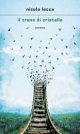
Il treno di cristallo - Mondadori - Collana scrittori italiani e stranieri
 Compralo subito Compralo subito
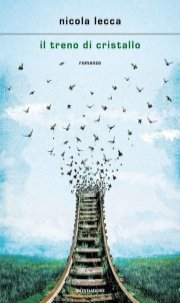 Broadstairs is a charming town on the English coast where Aaron works as an apprentice in the historic ice-cream shop Morelli. He lives in symbiosis with Anja, his depressed and over-protective mother who hides his father's identity and tells him nothing about Zagreb, the city they fled when he was just a little boy. Luckily, his best friend Gennarino is a volcano of joy, coloring the grayness of Anja's melancholy with his optimism.
As for Aaron, he has learned to be happy with little. All he needs is the flavor of tangerine ice cream, his lonely walks by the steep cliffs overlooking the sea, and the conversations with Crystal, the girl he loves. They met each other online and their relationship has been going on for just over a year, but it is only virtual. Every time he tries to arrange a meeting in real life, she finds a thousand excuses to postpone. And yet, Aaron prefers her incomplete presence to the pain of being alone.
Until an unexpected event changes everything. Aaron receives a letter from a notary in Croatia informing him about the death of his father, whose identity was kept hidden from him his entire life. Furthermore, the missive also invites him to Zagreb to attend the reading of the deceased's last will and testament, annexing an interrail ticket to cover the journey.
Ill-equipped and unprepared for life, Aaron faces his little odyssey in search of truth with courage. He travels from the United Kingdom to Zagreb passing through Hamburg, Prague, Ljubljana, Bratislava, and Szentgotthárd, finally confronting the world. He will face challenges, risks, and temptations, as well as unexpected encounters and immense beauty.
Nicola Lecca creates a thrilling contemporary fairytale with his chiseled and clear writing style. The innocence of the protagonist, whose pockets are filled with nothing but dreams, generates brilliant pages characterized by the disarming purity of a naked gaze: he is capable of shedding light on the world's complexity, highlighting the paradoxes of online relationships and the hypocrisy of the many traps set up to take advantage of our various kinds of loneliness.
Broadstairs is a charming town on the English coast where Aaron works as an apprentice in the historic ice-cream shop Morelli. He lives in symbiosis with Anja, his depressed and over-protective mother who hides his father's identity and tells him nothing about Zagreb, the city they fled when he was just a little boy. Luckily, his best friend Gennarino is a volcano of joy, coloring the grayness of Anja's melancholy with his optimism.
As for Aaron, he has learned to be happy with little. All he needs is the flavor of tangerine ice cream, his lonely walks by the steep cliffs overlooking the sea, and the conversations with Crystal, the girl he loves. They met each other online and their relationship has been going on for just over a year, but it is only virtual. Every time he tries to arrange a meeting in real life, she finds a thousand excuses to postpone. And yet, Aaron prefers her incomplete presence to the pain of being alone.
Until an unexpected event changes everything. Aaron receives a letter from a notary in Croatia informing him about the death of his father, whose identity was kept hidden from him his entire life. Furthermore, the missive also invites him to Zagreb to attend the reading of the deceased's last will and testament, annexing an interrail ticket to cover the journey.
Ill-equipped and unprepared for life, Aaron faces his little odyssey in search of truth with courage. He travels from the United Kingdom to Zagreb passing through Hamburg, Prague, Ljubljana, Bratislava, and Szentgotthárd, finally confronting the world. He will face challenges, risks, and temptations, as well as unexpected encounters and immense beauty.
Nicola Lecca creates a thrilling contemporary fairytale with his chiseled and clear writing style. The innocence of the protagonist, whose pockets are filled with nothing but dreams, generates brilliant pages characterized by the disarming purity of a naked gaze: he is capable of shedding light on the world's complexity, highlighting the paradoxes of online relationships and the hypocrisy of the many traps set up to take advantage of our various kinds of loneliness.
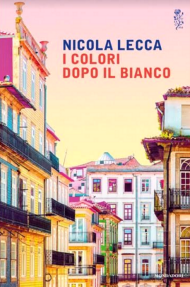
I colori dopo il bianco - Mondadori - Collana scrittori italiani e stranieri
Buy it now
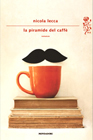
LA PIRAMIDE DEL CAFFE' - Mondadori
Buy it now
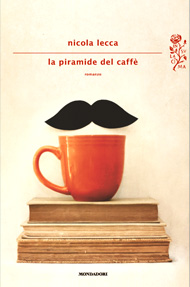 An elegant contemporary fairy tale, a spark that can enlighten your life. At eighteen, Imi has at last realized his dream of living in London after leaving behind the orphanage where he was raised, in Hungary. In London he works in a Proper Coffee-Shop (an international chain). His gaze is pure and na�ve, bubbling over with enthusiasm. He has learned to live in the present, to revel in even the tiniest emotion, and works hard day in, day out to whip up ever tastier cappuccinos.
It takes time for him to grasp what a hard city London is, and to understand the hierarchic ruthlessness behind the tedious set of rules that Proper Coffee employees must follow, which are summed up in The Coffee Guidebook, something akin to Holy Scriptures for his managers. His candor puts him in danger until Morgan, an Iranian bookseller with deep brown eyes, arrives on the scene to protect him. In his bold project, he enlists the elderly author and Nobel laureate Margaret, who is fed up with �everything�, but has an unshakable faith in life�s small, routine gestures. Together, she and Morgan will get Imi�s life on track and make a small miracle happen�
An elegant contemporary fairy tale, a spark that can enlighten your life. At eighteen, Imi has at last realized his dream of living in London after leaving behind the orphanage where he was raised, in Hungary. In London he works in a Proper Coffee-Shop (an international chain). His gaze is pure and na�ve, bubbling over with enthusiasm. He has learned to live in the present, to revel in even the tiniest emotion, and works hard day in, day out to whip up ever tastier cappuccinos.
It takes time for him to grasp what a hard city London is, and to understand the hierarchic ruthlessness behind the tedious set of rules that Proper Coffee employees must follow, which are summed up in The Coffee Guidebook, something akin to Holy Scriptures for his managers. His candor puts him in danger until Morgan, an Iranian bookseller with deep brown eyes, arrives on the scene to protect him. In his bold project, he enlists the elderly author and Nobel laureate Margaret, who is fed up with �everything�, but has an unshakable faith in life�s small, routine gestures. Together, she and Morgan will get Imi�s life on track and make a small miracle happen�
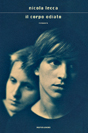
IL CORPO ODIATO - Mondadori
Buy it now
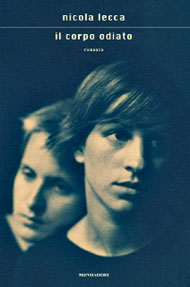 At the age of nineteen, Gabriele decides to leave his small village in
the wilds of the central Italian Apennines for a new life in France. His
departure is sudden, and he leaves without saying goodbye to anyone: he
is escaping from the boredom of a middle-class upbringing and a family
unable to understand him. In Paris he finds first a room and then a job
as a shop assistant in a celebrated jewellers on the Avenue Montaigne.
Although he doesn't yet realise it, this is the real beginning of his
journey. A painful, but necessary, voyage of discovery towards the
terrible acceptance of a desire so far from the accepted norms to which
he had previously rigorously adhered: the desire for a perfect body.
This novel is the precise, methodical and implacable diary of a young
man's battle with himself, a struggle against his deepest desires and,
above all, against his "imperfection". The pages of the novel take us
step by step through the consumption of Gabriele's body, constrained to
give up food and endure the torments of extreme physical exercise in an
inevitable vain attempt to accept himself and get closer to the
appearance of the interior image he has of himself. We witness moments
of dark discouragement, anger and even disgust, as well as moments of
pure joy and rediscovered wholeness, too often undermined by an ever
present and inexorable sense of guilt.
Forbidden and upsetting evenings spent at the Th�atre de la Princesse -
a disco in the Place de la Bastille where Gabriele goes frequently - are
systematically followed by bitter disappointment and long bouts of
isolation in what he calls his "decompression chamber", where he
desperately attempts to find some meaning and a balance that will allow
him to live with his impulses without being overwhelmed and killed.
It is not, however, a struggle against prejudice or social customs. More
simply it is the struggle that each of us faces when we are unable to
really accept and love ourselves, and find a balance between the
opposing forces of happiness and ambition.
With a warrior's determination, unusual honesty and a Franciscan search
for simplicity in language and imagery (a conscious reflection of the
protagonist's anorexia) Nicola Lecca recounts the descent of a demanding
young man who is fiercer with himself than the worst of judges could
ever be. Outside of any agenda or accepted voice, the novel gives us a
complex, vibrant portrait of a young man in search of his self.
At the age of nineteen, Gabriele decides to leave his small village in
the wilds of the central Italian Apennines for a new life in France. His
departure is sudden, and he leaves without saying goodbye to anyone: he
is escaping from the boredom of a middle-class upbringing and a family
unable to understand him. In Paris he finds first a room and then a job
as a shop assistant in a celebrated jewellers on the Avenue Montaigne.
Although he doesn't yet realise it, this is the real beginning of his
journey. A painful, but necessary, voyage of discovery towards the
terrible acceptance of a desire so far from the accepted norms to which
he had previously rigorously adhered: the desire for a perfect body.
This novel is the precise, methodical and implacable diary of a young
man's battle with himself, a struggle against his deepest desires and,
above all, against his "imperfection". The pages of the novel take us
step by step through the consumption of Gabriele's body, constrained to
give up food and endure the torments of extreme physical exercise in an
inevitable vain attempt to accept himself and get closer to the
appearance of the interior image he has of himself. We witness moments
of dark discouragement, anger and even disgust, as well as moments of
pure joy and rediscovered wholeness, too often undermined by an ever
present and inexorable sense of guilt.
Forbidden and upsetting evenings spent at the Th�atre de la Princesse -
a disco in the Place de la Bastille where Gabriele goes frequently - are
systematically followed by bitter disappointment and long bouts of
isolation in what he calls his "decompression chamber", where he
desperately attempts to find some meaning and a balance that will allow
him to live with his impulses without being overwhelmed and killed.
It is not, however, a struggle against prejudice or social customs. More
simply it is the struggle that each of us faces when we are unable to
really accept and love ourselves, and find a balance between the
opposing forces of happiness and ambition.
With a warrior's determination, unusual honesty and a Franciscan search
for simplicity in language and imagery (a conscious reflection of the
protagonist's anorexia) Nicola Lecca recounts the descent of a demanding
young man who is fiercer with himself than the worst of judges could
ever be. Outside of any agenda or accepted voice, the novel gives us a
complex, vibrant portrait of a young man in search of his self.
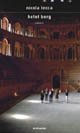
HOTEL BORG - Mondadori
Buy it now
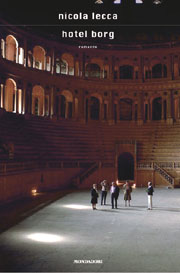 This is the story of five people who will soon happen to come together.
The story mostly takes place in Iceland: an "island of ice", filled with lava, wind and intrepid seagulls which walk the pavements of the capital even when, sometimes, there are passers-by. It takes place in these few streets but, above all, it takes place within the most secret consciousness of each of the protagonists.
Exactly like in a picture by Mirò, this story does not have a prima donna, or even a primo uomo, and all the characters co-exist, sharing the same space, without communicating even when they actually almost touch. Yet there is a thread that links them invisibly. It is a constricting thread, a limit: their human limit. And it is precisely within this inevitable limit that they move and exist together.
For his farewell concert, Alexander Norberg, the famous orchestral conductor, will involve Rebecca Lunardi, a complicated and cynical woman in the twilight of her career, and Marcel Vanut, a youngster made prisoner by unscrupulous parents who profit from the uniqueness of his voice while denying him every freedom.
Two disturbing figures loom over them: Hákon, the secret father of many children and the master in wild living for the youth of Reykjavík, and Oscar, employed in a luxury London hotel, with the sole task of bowing to arriving and departing guests.
Alexander, Rebecca and Marcel, like Hákon and Oscar, will challenge the rules of fate by offering their hopes to the Icelandic darkness: a wintry darkness filled with fog, capable of making every happening mysterious.
This is the story of five people who will soon happen to come together.
The story mostly takes place in Iceland: an "island of ice", filled with lava, wind and intrepid seagulls which walk the pavements of the capital even when, sometimes, there are passers-by. It takes place in these few streets but, above all, it takes place within the most secret consciousness of each of the protagonists.
Exactly like in a picture by Mirò, this story does not have a prima donna, or even a primo uomo, and all the characters co-exist, sharing the same space, without communicating even when they actually almost touch. Yet there is a thread that links them invisibly. It is a constricting thread, a limit: their human limit. And it is precisely within this inevitable limit that they move and exist together.
For his farewell concert, Alexander Norberg, the famous orchestral conductor, will involve Rebecca Lunardi, a complicated and cynical woman in the twilight of her career, and Marcel Vanut, a youngster made prisoner by unscrupulous parents who profit from the uniqueness of his voice while denying him every freedom.
Two disturbing figures loom over them: Hákon, the secret father of many children and the master in wild living for the youth of Reykjavík, and Oscar, employed in a luxury London hotel, with the sole task of bowing to arriving and departing guests.
Alexander, Rebecca and Marcel, like Hákon and Oscar, will challenge the rules of fate by offering their hopes to the Icelandic darkness: a wintry darkness filled with fog, capable of making every happening mysterious.
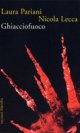
GHIACCIOFUOCO - Marsilio editori
Buy it now
 seven women ( a wife, an old lady, a prostitute...) seven short stories that will be written twice. Laura Pariani, in fact, will set each one of her short stories in Sout America, while Nicola Lecca will set them in the North...
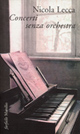
CONCERTI SENZA ORCHESTRA - Marsilio editori
Buy it now
 The road Nicola Lecca took to leave his island and face the larger world of the continent was the flight of music. This road is at once steep and fast, solitary and privileged, precluded to those who fear losing themselves toiling in the silence. Up there, where everything sounds final and absolute, where the eyes span freely on the intact beauty of the sky and of the world, where words seem even superfluous, Lecca learned to distinguish that which lasts in time and in memory and that which is simply ephemeral and vain, and once he descended, he tried to evoke it in writing.
He doesn't cry for lost traditions, or for worlds overrun by the horror of modernity - on the contrary - with a steady heart and a touch of pride he tells about the beauty that exists and resists and that he was able to behold.
Everyone knows that interpreting a music score is not simply a question of skill and technique, but requires the unveiling of secret drives, of emotions and feelings, of one's soul and its mysterious torments. Yet the enchantment this brings, the full beauty renewed each time "classical" music remerges from the shadow of time, is what allows us to measure the emptiness that surrounds us, the desert left after the horror, and to give once again breadth to our dreams.
In Concerti senza orchestra there is neither nostalgia nor regret; there is hope that - now that the century is over - we will be able to start to play and listen, to shiver and dream, in other words to live, all over again.
The road Nicola Lecca took to leave his island and face the larger world of the continent was the flight of music. This road is at once steep and fast, solitary and privileged, precluded to those who fear losing themselves toiling in the silence. Up there, where everything sounds final and absolute, where the eyes span freely on the intact beauty of the sky and of the world, where words seem even superfluous, Lecca learned to distinguish that which lasts in time and in memory and that which is simply ephemeral and vain, and once he descended, he tried to evoke it in writing.
He doesn't cry for lost traditions, or for worlds overrun by the horror of modernity - on the contrary - with a steady heart and a touch of pride he tells about the beauty that exists and resists and that he was able to behold.
Everyone knows that interpreting a music score is not simply a question of skill and technique, but requires the unveiling of secret drives, of emotions and feelings, of one's soul and its mysterious torments. Yet the enchantment this brings, the full beauty renewed each time "classical" music remerges from the shadow of time, is what allows us to measure the emptiness that surrounds us, the desert left after the horror, and to give once again breadth to our dreams.
In Concerti senza orchestra there is neither nostalgia nor regret; there is hope that - now that the century is over - we will be able to start to play and listen, to shiver and dream, in other words to live, all over again.
Cesare De Michelis
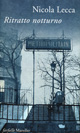
RITRATTO NOTTURNO - Marsilio editori
Buy it now
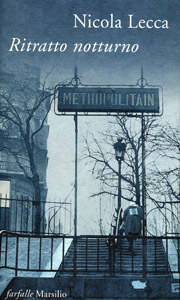 To live or to write, to resist in perfect solitude or to cede to the temptation of encountering the other, to hold our eyes closed to discover the darkness within us or to open them wide onto the vulgarity of the modern world, to taste the aching pleasure of memories or to resign oneself to the oblivion of the present? Anne-Rose has no doubts, she chases the mystery that only art can reveal.
In a dark and autumnal Paris, where the sun is always dim and life is confined behind the bistros' glass windows, Anne-Rose nurtures her dream of eternity in a daily fight against the ephemeral and the superfluous, to capture one by one words that will resist time.
"Only poetry can physically step out from the dream", she confesses fearlessly, in the diary that becomes the only witness of her abstract heroism.
Nicola Lecca created a character that embodies the crisis of modernity at the threshold of the new millennium, he has welcomed the challenge of speaking through a solitary and obstinate woman who confidently gives herself to her only love.
The diary that she leaves behind is a sublime soliloquy charged with faith and enflamed by a passion that consumed her life in order to transcend it.
To live or to write, to resist in perfect solitude or to cede to the temptation of encountering the other, to hold our eyes closed to discover the darkness within us or to open them wide onto the vulgarity of the modern world, to taste the aching pleasure of memories or to resign oneself to the oblivion of the present? Anne-Rose has no doubts, she chases the mystery that only art can reveal.
In a dark and autumnal Paris, where the sun is always dim and life is confined behind the bistros' glass windows, Anne-Rose nurtures her dream of eternity in a daily fight against the ephemeral and the superfluous, to capture one by one words that will resist time.
"Only poetry can physically step out from the dream", she confesses fearlessly, in the diary that becomes the only witness of her abstract heroism.
Nicola Lecca created a character that embodies the crisis of modernity at the threshold of the new millennium, he has welcomed the challenge of speaking through a solitary and obstinate woman who confidently gives herself to her only love.
The diary that she leaves behind is a sublime soliloquy charged with faith and enflamed by a passion that consumed her life in order to transcend it.
Cesare De Michelis
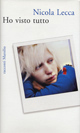
HO VISTO TUTTO - Marsilio editori
Buy it now
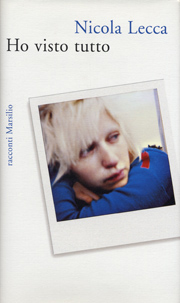 Between an experience and its narration there is a threshold, so thin as to invite us to cross it yet so deep as to suggest that we will certainly get lost. In the incorporeal yearning for words, life can only lose every possible meaning, it can only reveal its incongruence.
Nicola Lecca moves carefully along lunar landscapes of northern Europe, chasing the adolescent protagonists and catching them in the precise moment in their lives when the enchantment of childhood is still there but has already been broken, in the emptiness of a silence that absorbs them or in the explosion of a pain that breaks them, in a stunning crescendo.
Ho visto tutto is a sort of circumnavigation of the world to understand the evil that afflicts it, an obstinate reconnoitring along the paths of desolation, a continuous challenge to the impotence of words, to their insignificance.
Between an experience and its narration there is a threshold, so thin as to invite us to cross it yet so deep as to suggest that we will certainly get lost. In the incorporeal yearning for words, life can only lose every possible meaning, it can only reveal its incongruence.
Nicola Lecca moves carefully along lunar landscapes of northern Europe, chasing the adolescent protagonists and catching them in the precise moment in their lives when the enchantment of childhood is still there but has already been broken, in the emptiness of a silence that absorbs them or in the explosion of a pain that breaks them, in a stunning crescendo.
Ho visto tutto is a sort of circumnavigation of the world to understand the evil that afflicts it, an obstinate reconnoitring along the paths of desolation, a continuous challenge to the impotence of words, to their insignificance.
Cesare De Michelis
|
|
|